Why You Should Let Your Staff Work from Home

With all the buzz in the news recently about employers and their stances on working from home — Yahoo’s Marissa Mayer is against it; everyone else is for it — it’s no surprise you’re questioning whether it’s a good decision for your company.
There’s been a huge surge in the number of companies offering telecommuting as an option - Inc. Magazine reports a 60% increase in the number of people who work from home several days a week (see Infographic).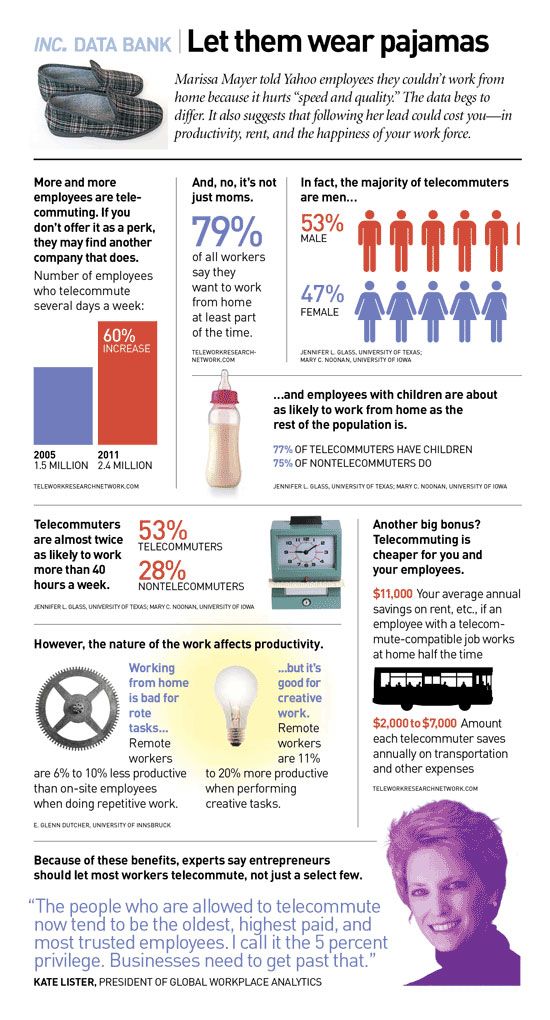
While it’s not ideal for every business to encourage telecommuting (if your staff is constantly working face-to-face with customers, that’s pretty much a no-go for working virtually), there are some fantastic reasons to consider it.
1. It Will Save You Money
Think about it: with fewer employees in the office, you pay less overhead. Heck, you could even reduce the size of your office space. And since research tells us that the average business would save $11,000 per employee per year, that could really add up if you started letting more staff work from home.
Creating a telecommute policy will help you save money not only in the obvious areas like lower overhead and office supplies, but also in turnover costs. With more employers offering flexible work situations, it’ll be a challenge to stay competitive if you don’t offer it as well. Losing and replacing an employee can cost $10,000 to $30,000, so you save this money if you’re offering your staff the kinds of work situations they want.
2. You’ll Get More Productive Employees
You’d think that your staff working at home would only open the floodgates to distractions, right? But research shows that you can increase productivity in impressive ways; Best Buy reports productivity levels have increased 35% since it implemented its telecommute program.
Numbers vary depending on the industry, but many companies whose employees focus on creative projects — like writing or design — see greater productivity when they work from home, compared to those who perform rote activities.
3. Your Staff Will Be Happier
And employees who are happy stay with your company longer. In fact, 95% of companies surveyed by Global Workplace Analytics say that telework has a high impact on employee retention.
Happier workers also means they’re less stressed and get sick less often, two factors that often contribute to the decline in productivity at your company. But when they work from home, they don’t have harrowing commutes to worry about, they may be able to work around their children’s schedules, and they’re more likely to work longer hours.
4. You’ll Attract Better Talent
Face it: you’ve probably already lost the chance to hire great job candidates because you weren’t offering a competitive telecommute option like your competitors were. Potential hires are scrutinizing the benefits of working at your company, and that extends far beyond what you pay in salary. And with more than three million work-at-home positions in the US, they can afford to be choosy about where they work.
If you do implement a telecommute policy, make sure to mention it in your job description when you hire.
Final Thoughts
All the benefits of telecommuting aside, the decision comes down to this: is your leadership willing to get behind this as a policy? If you meet resistance, it will be difficult to implement telecommuting as a viable option. Start by educating your executives about why your company should allow its employees to work virtually, and then, and only then, you can start the dialogue about what that would look like for your staff.


